


All Products
-
Butt Weld Fittings
-
Stainless Steel Elbow
-
Stainless Steel Tee
-
Stainless Steel Reducer
-
Stainless Steel Pipe Cap
-
Duplex Stainless Steel Pipe
-
Stainless Steel Stub Ends
-
Forged Pipe Fittings
-
Forged Steel Flanges
-
API Carbon Steel Pipe
-
Stainless Steel Seamless Pipe
-
Stainless Steel Welded Pipe
-
Nickel Alloy Pipe
-
Hastelloy Pipe
-
Copper Nickel Tube
-
Stainless Steel Plate
-
Stainless Steel Bars
-
Spiral Wound Gasket
-
Cast Acrylic Sheet
-
 Brazil---AimeeIn the latest vendor rating, TOBO won the excellent rating, it is good, will continue to cooperate.
 -
Thailand ---Dave MulroyASTM A213 T9 Alloy steel pipe ,Stable quality , good price, excellent serive, TOBO GROUP is our trustworthy partner .
-
USA ---AlfaroASTM A182 F55 Super Duplex Flange ,Good quality , we like that ! And delivery time in time also ,very professional.
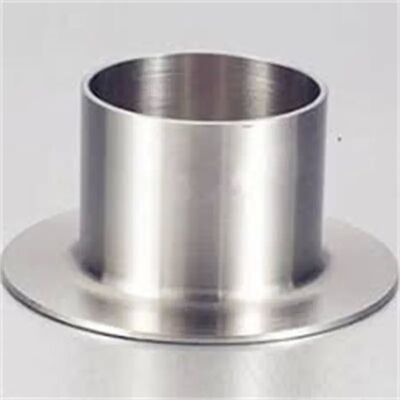
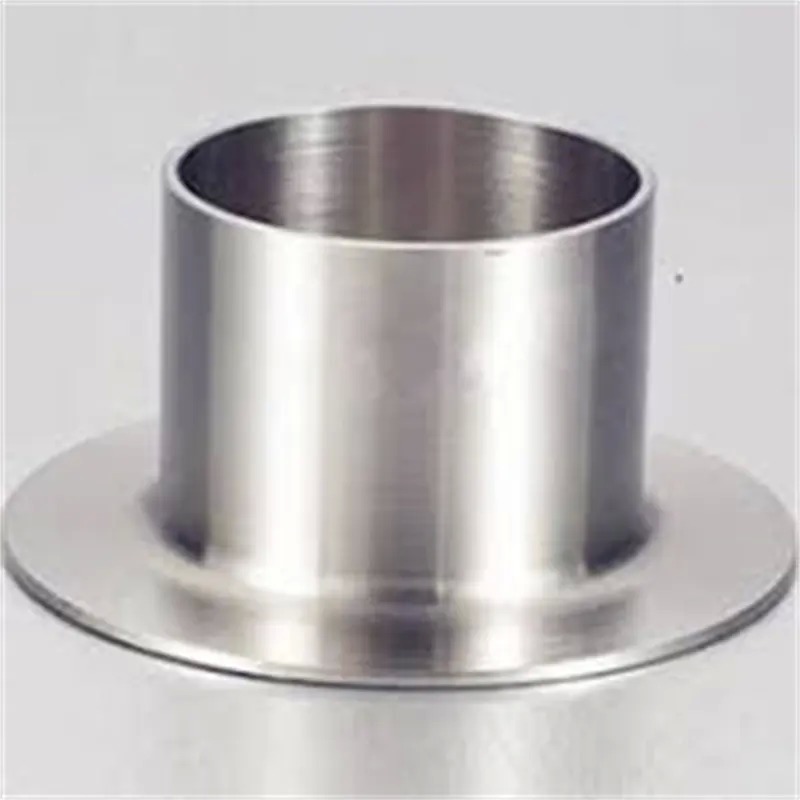
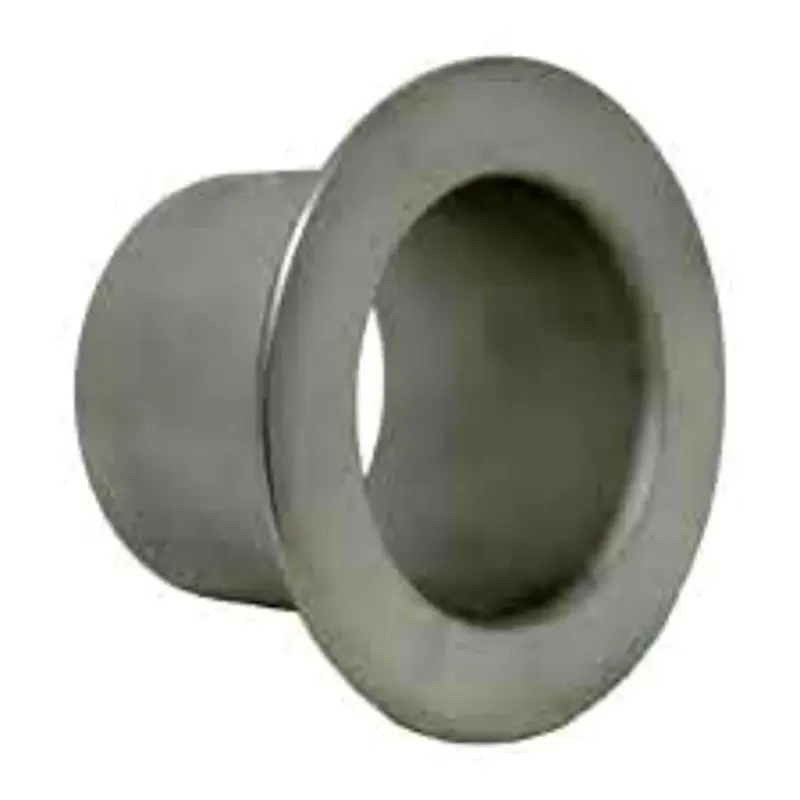
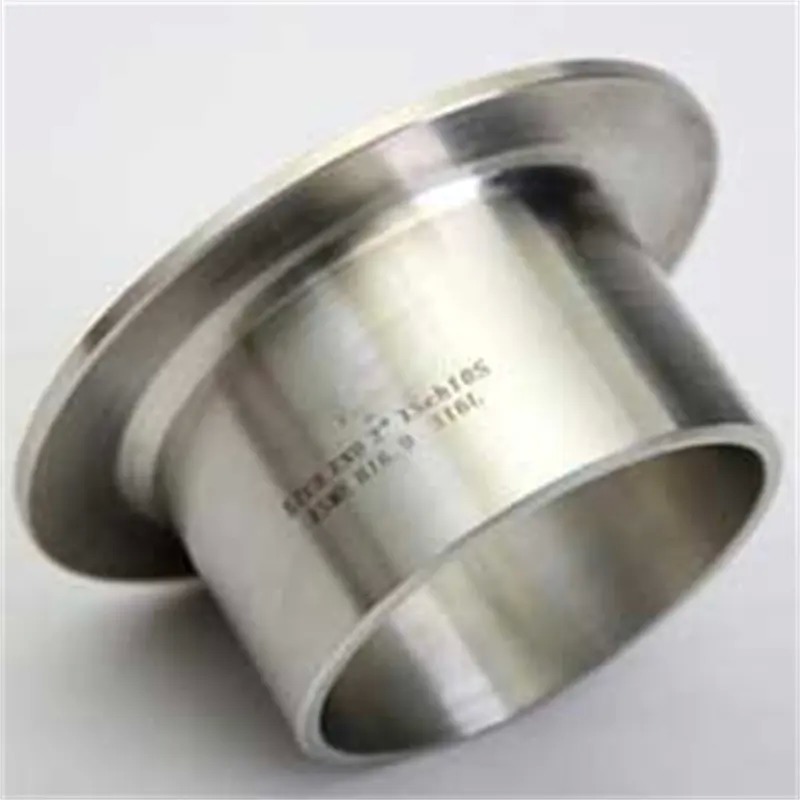
Stainless Steel Stub Ends Lap Joint Flange Fittings 304/316L ASME B16.9


Product Details
| Product Name | Stainless Steel Stub Ends Lap Joint Flange Fittings 304/316L ASME B16.9 | Material | Stainless Steel |
|---|---|---|---|
| Outer Diameter | 6-813mm | Thick | 1-40mm |
| Form | Long Radius, Short Radius, Reducing | Female | Hexagon |
| Shape | Short Pipe Section With A Flange Face | Schedule | 10S, 40S, 80S |
| Technic | Casting | Endtype | Butt Weld |
| Productname | Stainless Steel Stub Ends | Temperature Range | -20°C - 200°C |
| Standards | ASME B16.9, MSS SP-43 | Products | ASME/ANSI B16.9 Stub Ends |
| Pressurerating | Class 150 To Class 2500 | Surfacefinish | Polished, Pickled, Passivated |
| Highlight | Stainless Steel Stub Ends 304/316L,Lap Joint Flange Fittings ASME B16.9,Stainless Steel Flange Fittings with warranty |
||
Product Description
Stainless Steel Stub Ends Lap Joint Flange Fittings 304/316L ASME B16.9
1.Product Description
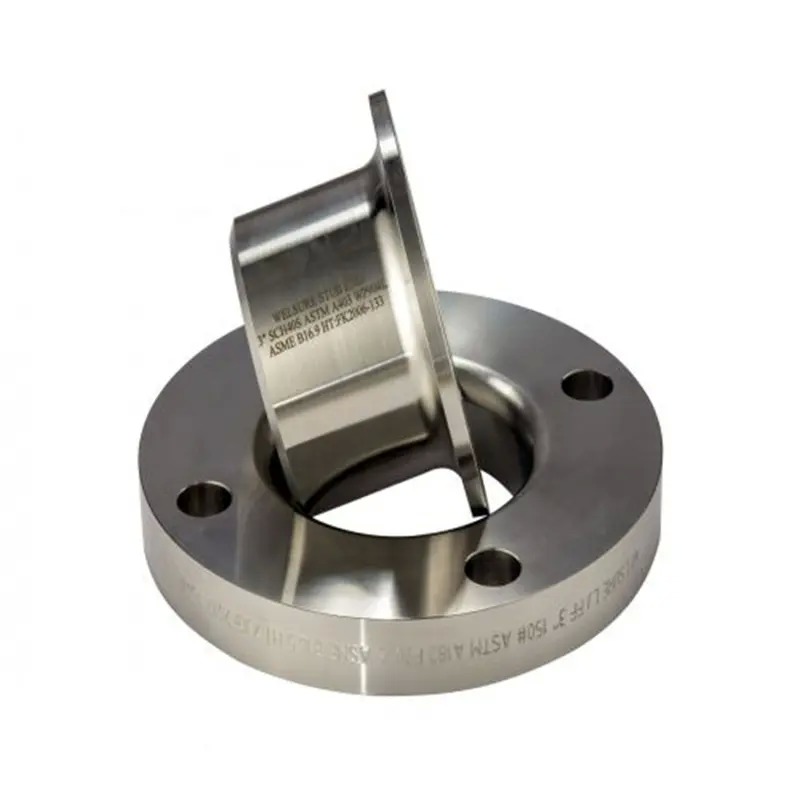
Stainless Steel Stub Ends (also known as lap joint stub ends or flange stub ends) are transition fittings that convert the welded end of a pipe into a flanged sealing face. Structurally, one end is a straight pipe section for butt-welding, while the other end is a precision-formed flared lap. The product does not include a flange and must be paired with Lap Joint Flanges. Materials include 304/304L, 316/316L, duplex stainless steel, and nickel-based alloys. Based on the back contour, they are classified as Type A (straight neck transition), Type B (curved transition), and Type C (forged thickened), suitable for standard wall, thin-wall, and high-pressure thick-wall applications respectively. Manufacturing standards cover ASME, DIN, and JIS systems to meet global engineering procurement requirements.
2.Product Applications
-
Standard flange connection between pipes and equipment: Used to quickly connect welded piping systems to valves, towers, heat exchangers, pumps, and other equipment with flanged nozzles.
-
Corrosive media transmission systems: Only the stub end contacts the media with corrosion-resistant alloy; the mating flange ring can be made of ordinary carbon steel, achieving zoned material optimization.
-
Large-diameter and high-pressure piping projects: The independently rotating lap joint flange solves the installation obstacle of rotating large-diameter pipes for bolt alignment, particularly suitable for offshore platforms and large-scale petrochemical plants.
-
Process stations requiring frequent inspection: Suitable for reactor feed/discharge nozzles, filter housings, compressor inlets/outlets, and other locations requiring regular disassembly, inspection, or cleaning.
-
Piping systems subject to thermal cycling and vibration: The fit clearance allows slight axial movement, buffering thermal expansion stresses and mechanical vibration impacts on welds and sealing faces.
-
Key application industries: Oil & gas, petroleum refining & chemicals, offshore engineering, power & energy, food processing, fine chemicals, semiconductors, and air separation units.
3.Product Advantages
- Compared to traditional integral flanged connection solutions, stainless steel stub ends offer the following significant advantages:
- Substantial material cost savings: In the complete connection assembly, only the stub end requires stainless steel or other corrosion-resistant alloys; the lap joint flange ring can be made of ordinary carbon steel. For large diameters and high pressure classes, material costs can be reduced by approximately 30% to 50%, with savings becoming more pronounced as pipe size increases.
- High installation efficiency: The lap joint flange can rotate freely along the stub end outer wall. During installation, only the flange ring needs to be turned for bolt hole alignment, eliminating the need to rotate large-diameter pipes. A single worker can complete the alignment, significantly reducing construction difficulty and man-hours for high-altitude and confined-space operations.
- Flexible and convenient maintenance: During system overhaul, simply loosen the bolts to slide the flange ring back along the pipe, allowing the entire pipe section to be lifted out. No hot work cutting or re-welding is required. After inspection, the assembly can be quickly reinstalled, effectively reducing plant downtime.
- Reliable and reasonable stress distribution: The butt weld is located on the straight section of the stub end, with sufficient distance from the lap sealing face. The weld heat-affected zone and the sealing face do not interfere with each other. Stresses from pipe vibration and thermal expansion do not overlap on the sealing face, resulting in superior long-term joint reliability compared to integral weld neck flanges.
- Effective equipment nozzle protection: Since the lap joint flange has no rigid welded connection to the pipe body, bending moments from pipe deadweight or thermal expansion are not directly transmitted to equipment nozzles. This feature is particularly critical for protecting the inlet/outlet nozzles of rotating equipment such as centrifugal pumps, compressors, and turbines, effectively preventing nozzle overload fractures.
- Excellent spare parts commonality: Lap joint flange rings of the same size can be interchanged with stub ends of different materials (e.g., 304, 316L, duplex). When preparing project materials, only universal flange rings and stub ends of various materials need to be stocked, enabling flexible responses to installation and replacement needs across different pipe sections while reducing warehousing costs and capital occupation.
- Superior full-lifecycle economics: Considering initial procurement costs, installation labor expenses, maintenance downtime losses, and spare parts capital commitment, the stainless steel stub end + lap joint flange combination has significantly lower total costs over a 25-year engineering service life compared to integral stainless steel flange solutions.

4.Key Technical Specifications
| Parameter Category | Specification Details |
| Design & Manufacturing Standards | ASME B16.9, ASME B16.28, MSS SP-43, DIN EN 12560, JIS B2311, GB/T 12459 |
| Common Material Grades | ASTM A403 WP304/304L, WP316/316L, WP321, WP347; Duplex S31803/S32205; 904L; Alloy 625/825 |
| Nominal Size Range | Seamless: DN15~DN600 (1/2″~24″); Welded: DN15~DN1800 (1/2″~72″) |
| Wall Thickness Schedules | Sch 5S, Sch 10S, Sch 20S, Sch 40S, Sch 80S, Sch 160, STD, XS, XXS |
| Mating Flange Pressure Ratings | Class 150 / 300 / 600 / 900 / 1500 / 2500; PN 6 / 10 / 16 / 25 / 40 / 63 / 100 |
| Lap Type | Long Stub End (weld away from sealing face, suitable for Sch 40S and above); Short Stub End (compact design, suitable for Sch 5S/10S thin-wall) |
| Lap Structure Type | Type A (straight neck transition); Type B (curved transition, no straight neck); Type C (forged thickened for high pressure) |
| Sealing Face Finish Accuracy | Standard: concentric serrations, Ra ≤ 6.3μm; Precision: Ra ≤ 3.2μm (for toxic or high-purity media) |
| Butt-Weld End Bevel | Per ASME B16.25, V or U bevel, bevel angle 30°~37.5°, land thickness 1.6mm |
| Recommended Mating Flange Material | Carbon steel (Q235, A105), galvanized carbon steel, or stainless steel (same or different grade as stub end) |
| Factory Inspection Items | Full dimensional inspection, visual inspection of surface and marking; PT/MT penetrant testing; RT sampling (welded type); intergranular corrosion testing (as required); hardness testing |
FAQ
1. Are you trading company or manufacturer ? We are manufacturer ,You can see the certification.
2.How long is your delivery time? Generally it is 5-10 days if the goods are in stock. or it is 15-20 days if the goods are not in stock, it is according to quantity.
3. Do you provide samples ? is it free or extra ? Yes, we could offer the sample for free charge but need pay the cost of freight.
4. What is your terms of payment ? Payment<=1000USD, 100% in advance. Payment>=1000USD, 50% T/T in advance ,balance before shippment.
Recommended Products