


All Products
-
Butt Weld Fittings
-
Stainless Steel Elbow
-
Stainless Steel Tee
-
Stainless Steel Reducer
-
Stainless Steel Pipe Cap
-
Duplex Stainless Steel Pipe
-
Stainless Steel Stub Ends
-
Forged Pipe Fittings
-
Forged Steel Flanges
-
API Carbon Steel Pipe
-
Stainless Steel Seamless Pipe
-
Stainless Steel Welded Pipe
-
Nickel Alloy Pipe
-
Hastelloy Pipe
-
Copper Nickel Tube
-
Stainless Steel Plate
-
Stainless Steel Bars
-
Spiral Wound Gasket
-
Cast Acrylic Sheet
-
 Brazil---AimeeIn the latest vendor rating, TOBO won the excellent rating, it is good, will continue to cooperate.
 -
Thailand ---Dave MulroyASTM A213 T9 Alloy steel pipe ,Stable quality , good price, excellent serive, TOBO GROUP is our trustworthy partner .
-
USA ---AlfaroASTM A182 F55 Super Duplex Flange ,Good quality , we like that ! And delivery time in time also ,very professional.
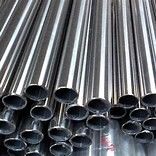
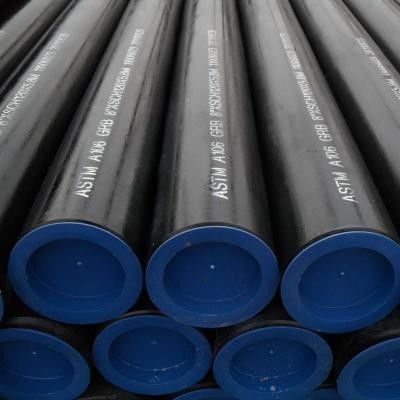
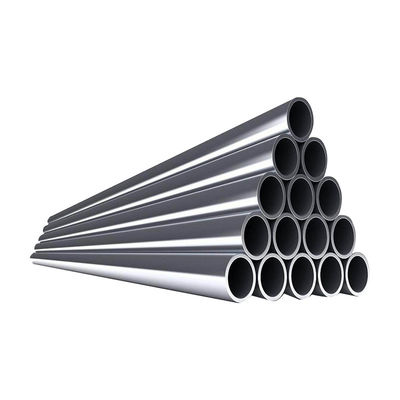
Normalized Annealed ASTM A106 Gr.B Carbon Steel Seamless Pipe Oil Gas Pipeline Service


| Place of Origin | Shanghai, China |
|---|---|
| Brand Name | TOBO |
| Certification | ISO 9001:2015, API 5L, PED 2014/68/EU |
| Model Number | A106-GrB-NT-SMLS |
| Minimum Order Quantity | 1 Ton |
| Price | USD 800-1200 / Ton |
| Packaging Details | Seaworthy export packing: plastic end caps, bundled with steel straps, wrapped in waterproof tarpaulin, loaded in wooden cases or on steel pallets per container |
| Delivery Time | 7-15 working days after order confirmation |
| Payment Terms | T/T,L/C at sight,Western Union |
| Supply Ability | 5000 Tons per Month |
Product Details
| Product Name | Normalized Annealed Carbon Steel Seamless Pipe | Application | Oil Gas Pipeline Service |
|---|---|---|---|
| Heat Treatment | Normalized, Annealed, Quenched And Tempered | Material Grade | ASTM A106 Grade B (Carbon Steel) |
| Size Range | OD 21.3mm To 914mm, Wall Thickness 2mm To 60mm | Schedule | SCH20, SCH40, SCH80, SCH160, XXS |
| End Type | Plain End, Beveled End | Inspection | Hydrostatic Test, Ultrasonic Test, Eddy Current, PMI |
| Documentation | Mill Test Certificate EN10204 3.1, Third-Party Inspection Report | Delivery Condition | Normalized And Tempered, Stress Relieved |
| Highlight | Normalized Annealed Carbon Steel Pipe,ASTM A106 Gr.B Seamless Tube,Heat Treated Oil Gas Pipe |
||
Product Description
Normalized Annealed ASTM A106 Gr.B Carbon Steel Seamless Pipe
Our ASTM A106 Grade B carbon steel seamless pipe undergoes a rigorous normalizing and annealing heat treatment process to optimize grain structure and mechanical properties. This controlled thermal cycle refines microstructure, relieves internal stresses from hot-rolling or cold-drawing, achieving uniform hardness with enhanced toughness. The normalization step heats the pipe above its critical transformation temperature followed by controlled air cooling, producing a fine-grained pearlitic-ferritic structure ideal for high-temperature service up to 400 degrees Celsius. Subsequent annealing further improves ductility and machinability, making these pipes the preferred choice for oil and gas pipeline, refinery, petrochemical plant, and power generation applications where reliability under thermal cycling is non-negotiable. Every pipe is delivered with full Mill Test Certificate (EN10204 3.1) documenting chemical composition, mechanical test results, and heat treatment parameters.

Technical Specifications
| Parameter | Specification |
|---|---|
| Material Grade | ASTM A106 Grade B / ASME SA106 Gr.B |
| Manufacturing Process | Hot Rolled / Cold Drawn Seamless |
| Heat Treatment | Normalized at 900-950 deg C + Tempered at 650-720 deg C |
| Outer Diameter Range | 21.3mm - 914mm (1/2 inch - 36 inch) |
| Wall Thickness Range | 2.0mm - 60mm (SCH10 - SCH160, XXS) |
| Length | 5.8m, 6m, 11.8m, 12m, or Custom Cut to Length |
| Tensile Strength | Minimum 415 MPa (60 ksi) |
| Yield Strength | Minimum 240 MPa (35 ksi) |
| Elongation | Minimum 22 percent longitudinal, 12 percent transverse |
| Surface Treatment Options | Black Painting, Varnish, 3PE Coating, FBE Coating |
| End Type | Plain End, Beveled End (30 degree bevel) |
| NDT Testing | 100 percent Hydrostatic, Ultrasonic, Eddy Current, PMI |
Key Advantages
- Optimized Grain Structure: Normalizing refines coarse grains formed during rolling, resulting in a homogeneous fine-grained microstructure that improves both strength and ductility uniformly across the pipe wall thickness.
- Stress Relief: The tempering cycle relieves residual stresses introduced during forming operations, minimizing the risk of distortion during subsequent machining, welding, or in-service thermal cycling.
- Enhanced High-Temperature Performance: The pearlitic-ferritic microstructure achieved through normalizing provides excellent creep resistance and dimensional stability at elevated service temperatures up to 400 degrees Celsius.
- Improved Toughness: Controlled cooling rates during normalizing produce a balanced hardness-toughness combination, reducing brittle fracture risk in low-temperature or dynamic loading conditions.
- Uniform Mechanical Properties: Full heat treatment ensures consistent tensile strength, yield strength, and elongation values throughout the entire pipe length, verified by destructive sample testing per ASTM A106 requirements.
- Superior Weldability: Normalized material exhibits excellent weldability with reduced susceptibility to heat-affected zone cracking, simplifying field welding during pipeline installation and reducing construction costs.
- Corrosion Protection Compatibility: The stress-relieved condition combined with optional external coatings (3PE, FBE, Coal Tar Enamel) provides comprehensive protection against atmospheric and buried service corrosion.
Applications
- Oil and Gas Transmission: Onshore and offshore pipeline systems for crude oil, natural gas, and refined product transportation requiring high-pressure containment and long-term operational reliability under cyclic loading conditions.
- Refinery and Petrochemical: Process piping for high-temperature hydrocarbon streams, steam lines, heat exchanger connections, and furnace tubes in refining, cracking, and chemical processing facilities worldwide.
- Power Generation: Main steam piping, feedwater lines, blowdown piping, and balance-of-plant connections in thermal power plants, combined-cycle facilities, and cogeneration installations operating under ASME B31.1 requirements.
- Boiler and Pressure Vessel: Superheater and reheater tubes, economizer piping, and pressure boundary components operating under ASME Boiler and Pressure Vessel Code Section I and Section VIII.
- Structural Engineering: High-rise building columns, bridge piling foundations, and heavy industrial framework where normalized mechanical properties ensure safety margins against wind and seismic loads.
Frequently Asked Questions
Q: What is the difference between normalized and annealed heat treatment for carbon steel pipe?
A: Normalizing involves heating the pipe to approximately 900-950 degrees Celsius, above the upper critical transformation temperature, followed by air cooling. This produces a fine-grained pearlitic-ferritic structure with enhanced strength and toughness. Annealing, performed at a lower temperature range of 650-720 degrees Celsius followed by slow furnace cooling, primarily softens the steel for improved machinability and relieves residual stresses. Our dual-treatment process combines both: normalization for grain refinement and strength optimization, followed by a controlled tempering anneal for stress relief and dimensional stability. This delivers a pipe product with balanced mechanical properties ideal for demanding oil and gas pipeline service conditions.
Q: Does ASTM A106 Grade B pipe require mandatory heat treatment after manufacturing?
A: Per ASTM A106/A106M specification, hot-finished pipe does not require mandatory heat treatment. However, cold-drawn pipe must be heat treated at a temperature of 650 degrees Celsius or higher after the final cold-draw pass to restore ductility. We go beyond minimum requirements by applying full normalizing and tempering to all our A106 Gr.B seamless pipes regardless of the manufacturing route, ensuring superior and consistent mechanical properties that exceed specification minimums. This value-added processing is particularly critical for pipes destined for high-temperature service above 350 degrees Celsius or those subject to rigorous third-party inspection per NACE MR0175 or PED 2014/68/EU.
Q: How does heat treatment affect the pressure rating of carbon steel seamless pipe?
A: Heat treatment does not directly alter pressure-temperature ratings calculated per ASME B31.3 Process Piping or B31.4 Pipeline Transportation Systems, which are primarily governed by the material allowable stress value at the design temperature. However, proper normalizing ensures the pipe achieves its full specified minimum tensile and yield strength uniformly, forming the basis for allowable stress table values in the design codes. Substandard or skipped heat treatment can result in localized weak zones with lower strength that may fail below the calculated design pressure. Our 100 percent NDT testing combined with documented heat treatment records provides quality assurance for safety-critical pressure containment applications.
Q: What documentation proves heat treatment compliance for the carbon steel seamless pipe?
A: Each shipment includes a comprehensive Mill Test Certificate (MTC) per EN10204 3.1, documenting heat number traceability, full chemical composition by spectrometer analysis, mechanical test results including tensile strength, yield strength, elongation, and hardness values, plus the time-temperature chart of the heat treatment cycle with furnace identification. For projects requiring enhanced verification, EN10204 3.2 certification with third-party inspector sign-off from recognized agencies such as SGS, Bureau Veritas, TUV, Lloyd's Register, or DNV is available upon request. All documentation is provided in English and can be submitted electronically for client review before shipment release.
Recommended Products